
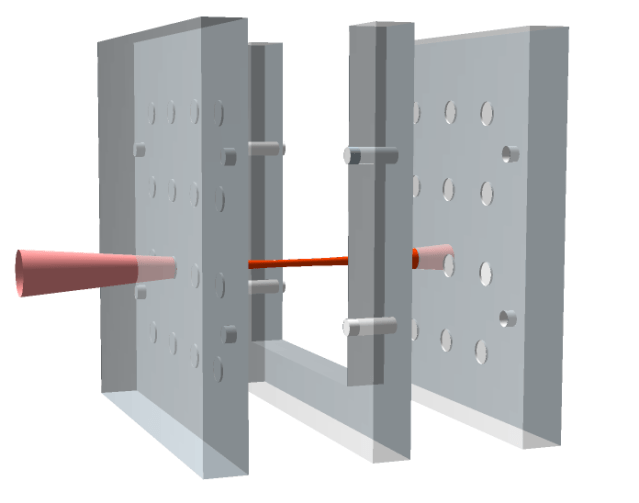
Here, we propose a new scheme, where levitated particles are coupled to, and controlled by, electrical circuits. To be built soon!
Levitated electromechanics: all-electrical cooling of levitated nano- and micro-particles

Here, we propose a new scheme, where levitated particles are coupled to, and controlled by, electrical circuits. To be built soon!
Levitated electromechanics: all-electrical cooling of levitated nano- and micro-particles
Our work on detection of nanoparticles in Silicon microcavities has been published in Applied Physics Letters. This technology will be really important for controlling smaller nanoparticles, and in turn realising a quantum physics with massive objects.
You can find a free video & audio recording of my Optomechanics tutorial lecture from SPIE Optics + Photonics 2017, by clicking on the image below:

You can site it in the following way:
James Millen, “Tutorial on optomechanics (Conference Presentation)”, Proc. SPIE 10347, Optical Trapping and Optical Micromanipulation XIV, 103471E (25 September 2017);
doi: http://dx.doi.org/10.1117/12.2272974
It only took 308 days, but we just had some new research published in Nature Communications.
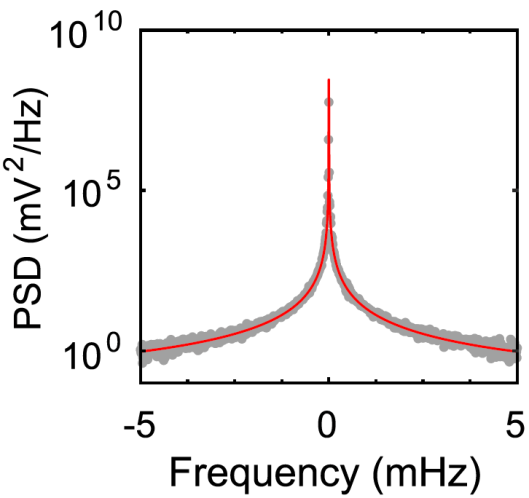
It was a completely surprising piece of work; we were able to levitate a tiny silicon cylinder, and make it tick like the hands of the worlds most perfect clock. No physical man-made object has ever rotated in such a perfect way. Our nano-watch only lost one millionth of a second over four days.
This is useful, because we can detect even the tiniest changes to the motion of our little watch-hands, meaning we can shove it places and detect all kinds of interesting, hard to measure things.
You can read Optically driven ultra-stable nanomechanical Rotor here.
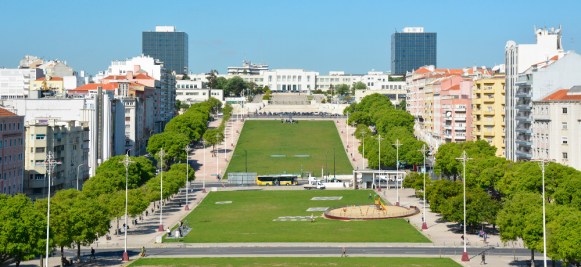
I was fortunate enough to be invited to give not one, but two lectures at this exciting, interdisciplinary meeting. I discussed working with nanoparticles in high vacuum, and also presented The Quantum Workshop, which the organisers had kindly shipped all the way from Vienna to Lisbon!
I wrote a short Viewpoint article for Physical Review X, giving an overview of some very exciting work in the field of nanothermodynamics, where researchers have surpassed the Carnot limit of efficiency.

I am extremely honoured to have received the Institute of Physics’ Bates Prize. You can read the citation here. It is a particular pleasure to belong to a list including my Master’s project supervisor (Mike Tarbutt), my Ph. D. supervisor (Matt Jones), and my close collaborator (Janet Anders).
I gave a lecture to celebrate, at this year’s QuAMP in Glasgow. It didn’t stop raining for one entire week, impressive Scotland! It was great to reconnect with the UK quantum physics community.


I have thoroughly enjoyed attending the Optical Trapping and Optical Micromanipulation meeting at SPIE Optics and Photonics 2017 in San Diego. I delivered a tutorial lecture on Optomechanics and chaired a session on levitated optomechanics.
You can find my tutorial lecture here.
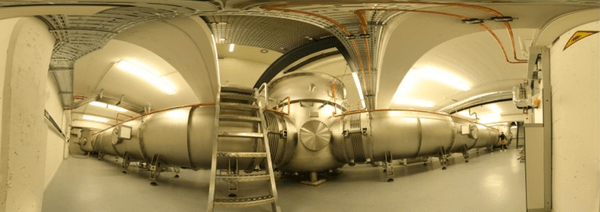
I had an great day hosted by Klemens Hammerer, giving a talk on our research and visiting various labs. I particularly enjoyed seeing a rocket which launched cold atoms into space, and the 10m LIGO prototype.
Very happy to speak about Rotational Optomechanics at the Highland Spring School on Mesoscopic Physics, organized by the Czech Academy of Sciences. AND it took place in a physics castle!

 Levitated Nanophysics Group